
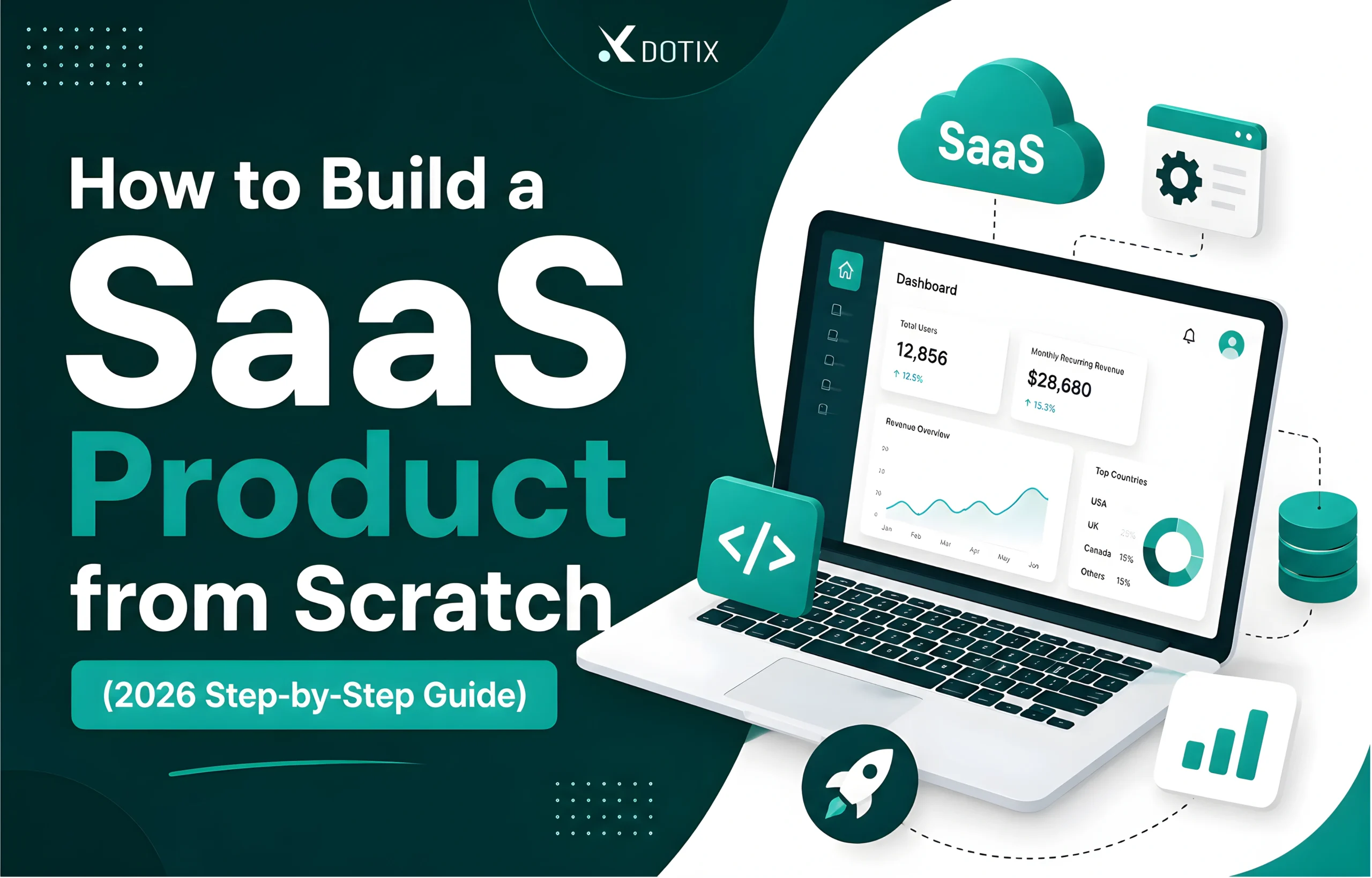
Building a SaaS product used to be something only large tech companies could afford. In 2026, that’s no longer the case. Startups, small businesses, and even solo founders are launching successful SaaS platforms with the right strategy, tools, and execution.
If you’re wondering how to build a SaaS product from scratch, this guide breaks down the exact process from idea validation to launch and scaling without fluff or overcomplication.
Whether you’re a founder, business owner, or entrepreneur, this guide will help you turn your idea into a scalable, revenue-generating SaaS product.
What is a SaaS Product?
A SaaS (Software as a Service) product is a cloud-based application that users access via a subscription model. Instead of installing software, users log in through a browser.
Popular examples include tools like CRM platforms, project management apps, and accounting software.
Key Characteristics:
- Subscription-based (monthly/yearly)
- Hosted on cloud infrastructure
- Scalable and accessible globally
- Continuous updates and improvements
👉 This recurring revenue model is what makes SaaS one of the most profitable business models today.
SaaS Product Development Process (Overview)
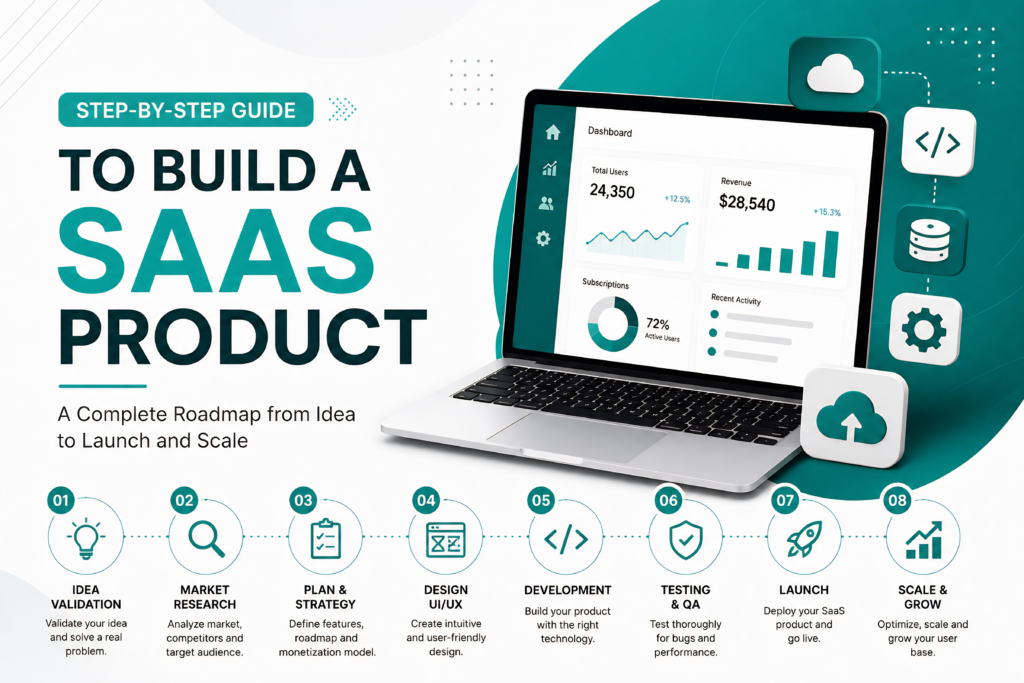
Before jumping into development, you need a clear roadmap. The SaaS development process typically includes:
- Idea validation
- Market research
- MVP development
- UI/UX design
- Development
- Testing & QA
- Launch
- Scaling
Let’s break it down step by step.
Step-by-Step Guide to Build a SaaS Product
1. Validate Your SaaS Idea (Most Important Step)
Most SaaS products fail not because of bad development—but because of bad ideas.
Before writing a single line of code, validate your idea:
- Identify a real problem
- Define your target audience
- Analyze competitors
- Check demand using tools like Google Trends
👉 Ask yourself: “Will people pay for this solution?”
💡 Pro Tip: Build a simple landing page and collect emails before development. This confirms real interest.
2. Conduct Market Research
Understanding your market gives you a competitive advantage.
Focus on:
- Target audience pain points
- Pricing models competitors use
- Feature gaps in existing products
👉 Example: If competitors are complex, you can win with simplicity.
3. Build an MVP (Minimum Viable Product)
Instead of building a full product, start with an MVP.
An MVP includes:
- Core features only
- Basic UI
- Functional product solving one problem
This reduces cost, time, and risk.
MVP Development Guide for Startups
4. Choose the Right Tech Stack
Your tech stack directly affects scalability and performance.
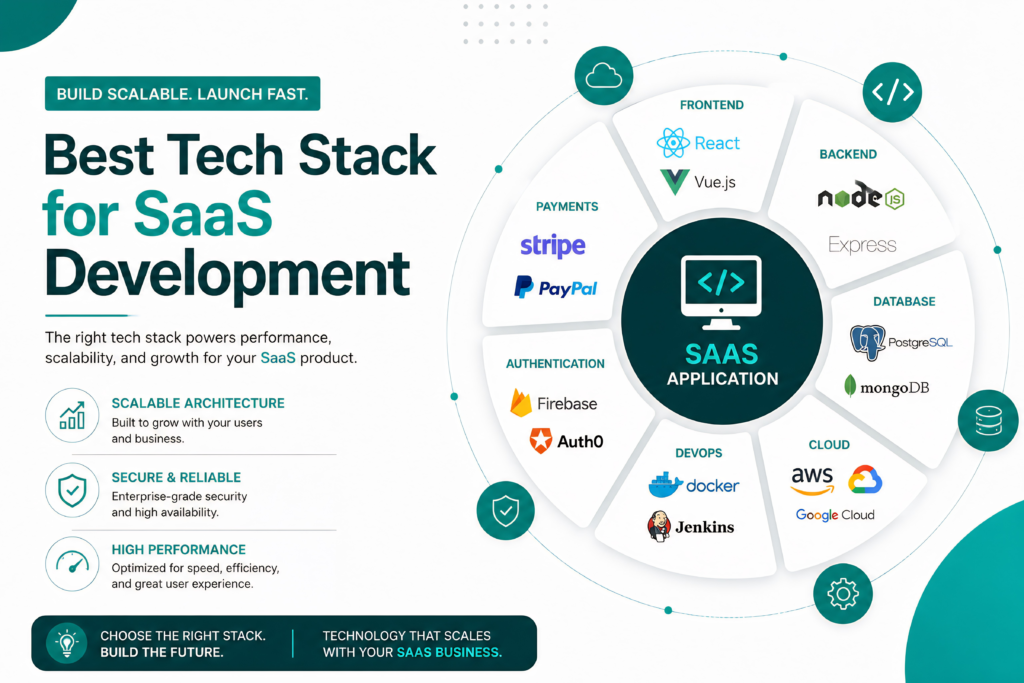
Common SaaS Tech Stack:
- Frontend: React, Vue
- Backend: Node.js, Django
- Database: PostgreSQL, MongoDB
- Cloud: AWS, Google Cloud
👉 Choose a stack based on:
- Scalability
- Development speed
- Budget
5. Design UI/UX That Converts
Good design is not just about looks—it’s about usability.
Focus on:
- Simple navigation
- Fast onboarding
- Clean dashboard
👉 A bad user experience increases churn rate, which kills SaaS growth.
6. Development Phase
Now comes actual product development.
Use Agile development methodology:
- Break work into sprints
- Continuous feedback
- Iterative improvements
👉 This ensures flexibility and faster delivery.
7. Testing & Quality Assurance
Never skip this step.
Test for:
- Bugs
- Performance
- Security
- Cross-device compatibility
👉 A buggy SaaS product can destroy trust instantly.
8. Launch Your SaaS Product
Once ready, launch strategically:
- Beta launch (limited users)
- Gather feedback
- Fix issues
- Public launch
👉 Use platforms like:
- Product Hunt
- Startup communities
Cost to Build a SaaS Product in 2026
One of the most searched questions is:
👉 “How much does it cost to build a SaaS product?”
Estimated Cost Breakdown:
- MVP Development: $10,000 – $50,000
- Full Product: $50,000 – $200,000+
- Monthly Maintenance: $1,000 – $10,000
💡 Costs depend on:
- Features
- Team size
- Complexity
- Location of developers
Custom Software Development Cost Guide
Best Tech Stack for SaaS Development
Choosing the right tech stack is critical for long-term success.
Recommended Stack:
- Frontend: React
- Backend: Node.js
- Database: PostgreSQL
- Cloud: AWS
👉 This combination ensures:
- Scalability
- Performance
- Flexibility
Common Mistakes in SaaS Development
Avoid these common mistakes:
❌ Skipping idea validation
❌ Overbuilding features
❌ Ignoring user feedback
❌ Poor UI/UX
❌ No marketing strategy
👉 Simplicity wins in SaaS.
How to Scale a SaaS Product
Once your product gains traction, scaling becomes the focus.
Key strategies:
- Optimize cloud infrastructure
- Improve customer retention
- Reduce churn rate
- Add advanced features
- Invest in marketing
👉 Scaling is not just about users it’s about sustainable growth.
External Resource
For deeper insights into SaaS growth strategies, you can explore resources from the Harvard Business Review, which regularly publishes research on SaaS and digital transformation.
Frequently Asked Questions (FAQs)
1. How long does it take to build a SaaS product?
It usually takes 3 to 9 months depending on complexity, features, and team size.
2. Can I build a SaaS product without coding?
Yes, no-code tools allow you to build basic SaaS products, but for scalability, custom development is recommended.
3. How much does it cost to build a SaaS product?
Costs range from $10,000 for an MVP to $200,000+ for a full-scale product.
4. What is the best tech stack for SaaS?
React, Node.js, and AWS are widely used due to scalability and performance.
5. How do SaaS companies make money?
Through subscription models (monthly or yearly recurring revenue).
6. What is an MVP in SaaS?
A Minimum Viable Product is a basic version of your product with core features to test the market.
7. How do I validate my SaaS idea?
Use landing pages, surveys, and competitor research to test demand before development.
8. How can I scale my SaaS product?
Focus on user retention, cloud scalability, and continuous feature improvements.
Final Thought
Building a SaaS product from scratch is not easy but with the right strategy, it’s one of the most rewarding business models in today’s digital economy.
Focus on solving real problems, keep your product simple, and scale smartly.
This guide is brought to you by Dotix, a software development agency specializing in SaaS, mobile apps, and custom solutions.



 Web & Design
  Development
  Seo Expert
  Online Marketing
  Industries